Welcome to this cyberplace, set up as a space for news and reviews of A Gentleman of Pleasure and occasional jottings about John Glassco. Five years have now passed since publication, and I've moved on to other projects, but I'm leaving this up with the thought that those drawn to Glassco's writing will find something of interest.

Showing posts with label Graeme Taylor. Show all posts

29 July 2012

Selling Jamaica Farm


Photo by Stewart Cooke

Newly installed on the barn at what was once John Glassco's Jamaica Farm, site of the much-missed Foster Horse Show. The farm itself is again for sale, this time in two parts.


The barn, milk house and three acres of land. "Known locally as the original site of the Foster Horse Show."


The house Glassco built for first wife Elma. The realtor's listing recognizes its past:
JAMAICA FARM - CHANNEL YOUR INNER POET when you choose this home, formerly Buffy Glassco's residence. Discreetly sheltered by majestic pines, neighbour to Brome Lake Golf Club and well-located near Autoroute 10 and Brome Lake, your home and its 23+ acres has much to offer.
At $745,000 for both properties, the farm ranks as one of the most expensive pieces of Glasscoiana. Well worth the investment, I say.

The Eastern Townships Advertiser, 16 August 1961

01 April 2012

Now that April's Here...


Spring has sprung and the thoughts of a middle aged man turn to work. Much of these past few months have been spent going through John Glassco's letters in preparation for a volume to be published this coming autumn.

More on that another day.

This morning, rereading correspondence between the poet and his old McGill friend Leon Edel, I was stuck – for the nth time – by their final exchanges. Glassco, not long for this world, continues to be haunted by a short story published a half-century earlier: Morley Callaghan's "Now that April's Here".

The story is one the writer's most anthologized, but I've never quite understood its weight; Callaghan had better than this. Its real value lies in it being a nouvelle à clef, with Glassco cast as Johnny Hill, a young, chinless expatriate who is writing his memoirs. Glassco's friend Graeme Taylor appears as Charles Milford, whom Johnny supports through a small monthly income. As portrayed by Callaghan, they're two gay boys who delight in snickering at others. Robert McAlmon makes an appearance as Stan Mason, a boozy writer who is hurt to discover that he is their chief target.

Graeme Taylor, John Glassco and Robert McAlmon, Nice, 1929

The story was first published in the Autumn 1929 number of This Quarter, by which time Callaghan had completed his "summer in Paris" and was safely back in Toronto. He never got to witness the effects the time bomb left behind in Montparnasse had on Glassco's friendship with McAlmon. Leon Edel came to Glassco's aid by dismissing story in his "Paris Notes" column for the Montreal Daily Star. Late in life, after Glassco's death, he allowed that Callaghan's depiction of the "two boys" was accurate.


For Glassco, it was a story that just wouldn't go away. In 1936, he saw it given a place of prominence in Now that April's Here and Other Stories. It would return in Morley Callaghan's Stories (1959) and lives on in the man's misleadingly-titled Complete Stories (2003).


Then we have Now that April's Here, an odd 1958 feature comprised of four Callaghan short stories": “Silk Stockings”, “Rocking Chair”, “The Rejected One” and “A Sick Call”, but not the one that gives the film its title.


Now that April's Here enjoyed a gala opening in Toronto, closing after two weeks. After a few more runs through a projector in Hamilton, it was never screened again. Glassco was spared the distress of reading the title on Montreal movie marquees.

This seven minute clip, courtesy of YouTube, reveals why the film is forgotten:


Criterion will not be interested.

Cross-posted at The Dusty Bookcase.

30 September 2011

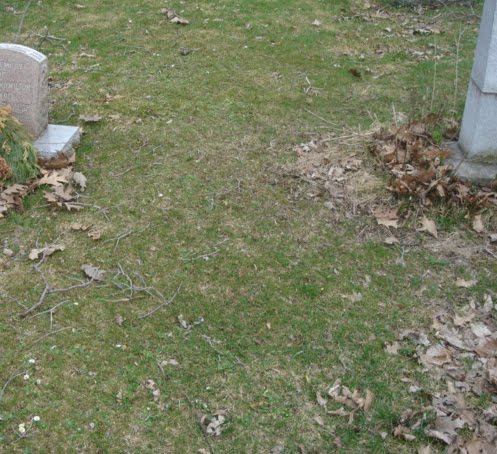
Graeme Taylor's Grave, Mount Royal Cemetery


Unmarked.

The thirtieth of thirty posts focussing on images not found in A Gentleman of Pleasure.
The entire series can be found here.

21 September 2011

Jamaica Farm, Foster, Quebec


Purchased in 1945, Jamaica Farm was Glassco's second home in Quebec's Eastern Townships. The poet and his friend Graeme Taylor lived alone in its yellow farmhouse (then white) until 1956, when they were joined by 'housekeeper' Elma Koolmer. Taylor died the following year. In 1963, Glassco and Elma were married.


The couple lived in the farmhouse until 1965, when Glassco built a new home for Elma on the land.

The twenty-first of thirty posts focussing on images not found in A Gentleman of Pleasure.
The entire series can be found here.

19 September 2011

Graeme Taylor, Foster, Quebec, c. 1955


The last known photograph of Graeme Taylor, taken approximately two years before his death.

The nineteenth of thirty posts focussing on images not found in A Gentleman of Pleasure.
The entire series can be found here.

18 September 2011

Robert McAlmon's The Nightinghouls of Paris


Three pages from the manuscript of Robert McAlmon's The Nightinghouls of Paris. A roman à clef set in 1929 Montparnasse, it centres largely on Sudge Galbraith and Ross Campion, two Montreal boys modelled after Glassco and Graeme Taylor.


In 1947, McAlmon mailed the manuscript to Glassco. It was returned without comment, bringing their nineteen-year friendship to an abrupt end. Glassco was most disturbed by the frank portrayal of himself and his relationship with Taylor. The novel's publication would have been embarrassing, if not disastrous.


Glassco needn’t have worried about the novel’s appearance. In 1947, McAlmon’s career was already over; he would not live to see another title published. It wasn't until 2007, sixty years later, that The Nightinghouls of Paris was finally published by the University of Illinois Press. Edited with an Introduction by McAlmon's biographer Sanford J. Smoller, it is an invaluable document, and is recommended highly to anyone studying Glassco and his work.

The eighteenth of thirty posts focussing on images not found in A Gentleman of Pleasure.
The entire series can be found here.

17 September 2011

John Glassco and Graeme Taylor, Nice, 1929


Glassco and Graeme Taylor captured strolling along the boardwalk in Nice. It's almost certain that the photographer was Robert McAlmon.


The seventeenth of thirty posts focussing on images not found in A Gentleman of Pleasure.
The entire series can be found here.

15 September 2011

First Statement, Vol. 2, No. 12 (April-May 1945)


The "April & May 1945" number of influential Montreal little magazine First Statement. Irving Layton, A.M. Klein, Patrick Anderson, Ralph Gustafson, Miriam Waddington... amongst the lesser-known writers we find Wingate Taylor, "a farmer in the Eastern townships [sic] of Quebec." He's better remembered – though, in truth, he's barely remembered at all – as Graeme Taylor. His contribution, "The Horse-Stall", is taken from Brazenhead, an unpublished lost novel. The story marked Taylor's first appearance in print since his days in Montparnasse. It was also his last.

The same issue features a Glassco review of Gwethelyn Graham's Earth and High Heaven.


The fifteenth of thirty posts focussing on images not found in A Gentleman of Pleasure.
The entire series can be found here.
An expanded version of this piece has been cross-posted at The Dusty Bookcase.

03 September 2011

Postcards of Traymore Cafeteria, Montreal


Three postcards of Montreal's Traymore Cafeteria, corner St. Catherine and Peel, c. 1925. The eatery isn't mentioned in Memoirs of Montparnasse, but does feature in Glassco's 1929 "Extract from an Autobiography". The teenaged memoirist writes that it was there he managed to convince Graeme Taylor ("George") that they should relocate to Paris:
After a great deal of argument and pleading I persuaded George to leave the hated offices of the Sun Life, and agree to come with me to Paris, where we could both live more cheaply than anywhere else. Before he had finally agreed, we had sat many evenings in the Traymore Cafeteria, I urging, he remaining silent and thinking of my financial good.
“But George, you know that I cannot go to Paris without you. I can go nowhere without you. To think of you living alone here, without me whom you love so much, sweating in the policy vaults of that organization down the next street, and coming in here by yourself in the evening, looking around – do you think I could enjoy myself in Paris, had I ten women in my bed every night?” I delivered this earnestly.
George sunk himself a little further in his chair, his mouth puffing out, and his eyebrows drew together with concern for my physical well-being abroad.
“But this is so ridiculous. Where will we get to eventually by doing this? You know I would love it, but remember that you have a future ahead of you – there is no reason why you should not succeed in writing something good, and you can certainly do that without me along, to persuade you that your work is better than it is.” He beamed at me, adding, “And you confess that you would like to be a celebrated ‘man of letters.’”
It was a long time before he came around, and I had to make out little plans and charts at the table, showing how we could both live on the money. When he finally consented I immediately fetched a newspaper and turned to the shipping page in great excitement.
The Drummond Building, which was once home to the cafeteria, still stands. The spot is currently occupied by a Guess store.

The third of thirty posts focussing on images not found in A Gentleman of Pleasure.
The entire series can be found here.

02 September 2011

This Quarter, No. 4 (Spring 1929)


John Glassco's copy of This Quarter, no. 4. Published in the spring of 1929, the nineteen-year-old's contribution was "Extract from an Autobiography", which he would four decades later describe as the first chapter of Memoirs of Montparnasse. Not true, though it does cover the same time period.

Unavailable for nearly 82 years, "Extract from an Autobiography" features as an appendix in A Gentleman of Pleasure.

The second of thirty posts focussing on images not found in A Gentleman of Pleasure.
The entire series can be found here.

03 July 2011

Celebrating the Foster Horse Show


Not today, of course, but one of many Sundays past in which thousands would gather at John Glassco's Jamaica Farm. From the same article, published in the 28 July 1966 edition of the Eastern Townships Advertiser:


The Foster Horse Show began sixty year ago as a bit of a lark, but grew to be one of the largest equestrian events in the country. At its height, the show nearly overwhelmed Glassco's grounds. It was estimated that as many as 5000 people attended in 1964, all to the benefit of the Brome-Missisquoi-Perkins Hospital in nearby Sweetsburg.

Eastern Townships Advertiser, 15 July 1964

Eastern Townships Advertiser, 29 July 1964

Glassco played host to the show for more than two decades, before age and concerns over insurance and liability forced him to give up the role. It was moved nine kilometres down the road to the village of Knowlton, where it lived until 1998, when it was moved to Bromont's Olympic Equestrian Centre.

Saturday, July 16, will see the unveiling of a plaque honouring Glassco, Graeme Taylor and the other founders of the Foster Horse Show: Harry Wallace, Miles Rhicard, Gilbert Rhicard, Ann Johannson and Stan Fewster, along with announcer James Blackwood and ringmaster George Rogerson.

This comes as part of the Knowlton Wordfest – still in its infancy and already one of the very finest Canadian literary festivals. I'll be in the audience... it is not to be missed.


05 May 2011

Souvenirs of Baie d'Urfé


Returning home from Montreal this past Sunday, I took the opportunity to pass by the Baie d'Urfé house that Glassco and Graeme Taylor rented in the warmer months of 1934 and 1935. Though the exterior had remained virtually unchanged in the seven decades since, I was saddened to discover that an ill-considered extension has been recently added. The grounds upon which Glassco sat writing "The Way Back", the earliest version of "The Black Helmet", is now taken up by a two-car garage.


16 April 2011

Souvenirs of the Eastern Townships


A favourite of the thirty images in A Gentleman of Pleasure, this 1940 photograph captures John Glassco riding outside the Eastern Townships community of Knowlton. Seated next to him is his "housekeeper" Sappho, Mary Elizabeth Wilson, the third in one of several ménages à trois he enjoyed with Graeme Taylor.

A week ago, A Gentleman of Pleasure was launched at Knowlton's Brome Lake Books. Driving home the next day, I snapped these photos.


The Knowlton United Church, where on 18 February 1941 Taylor married Sappho. The union was witnessed by Glassco and the minister's wife.


In a letter to his friend Robert McAlmon, Glassco wrote that after the ceremony he joined the newlyweds in consuming "the last champagne in the district". Sappho left the two men in 1944 – she divorced Taylor five years later.


Jamaica Farm, Glassco's first home in the village of Foster. In 1945, he moved into this yellow farmhouse with Taylor. The two men lived alone until 1956, when they were joined by Elma Koolmer, another "housekeeper". Roughly six months later, Taylor died of Buerger's Disease in Montreal's Royal Victoria Hospital.

Glassco's second and last Foster house, built in 1966 for Elma. Five years later, he would scatter her ashes in a stream that can be seen from the rear windows.

Crossposted at The Dusty Bookcase.
13 April 2011

A Gentleman of Pleasure in Men's Fashion


"John Glassco's Memoirs of Montparnasse is a classic in the literature generated by Paris in the 1920s, a time when Glassco, born in Montreal in 1909, got to hang with Ernest Hemingway and James Joyce. But as Brian Busby points out in the first sentence of the introduction to his new biography, A Gentleman of Pleasure: One Life of John Glassco, Poet, Memoirist, Translator, and Pornographer ($40, McGill-Queen's University Press), Glassco, among all those other things, was also, by his own confession, an 'accomplished liar.' That by itself promises a tale of truths as fascinating as fiction."


04 April 2011

A Gentleman of Pleasure is Recognized


The first review of A Gentleman of Pleasure today – this from literary historian, antiquarian bookseller and author Stephen J. Gertz.
...A Gentleman of Pleasure is the long-awaited biography of Glassco, one of the most fascinating characters of twentieth century literature in English yet one, for the most part, completely unknown. That should change with this thoroughly researched, engaging, and elegantly written book.
How to honour the occasion? Why with a previously unpublished photo of John Glassco and Graeme Taylor strolling along the boardwalk in Nice, of course.

Crossposted at The Dusty Bookcase.